Official Spark™ Clear Aligners video. It starts muted. Select “Turn sound on” whenever you want to hear it.
Clear aligner treatment
Spark™ Clear Aligners in Cockburn Central
Clear aligners can be a discreet, removable way to move teeth, but successful treatment begins with the right diagnosis—not with choosing a product from a website. Smile & Shine Dental Clinic works with Spark™ Clear Aligners by Ormco as one clear-aligner option for suitable patients. Before recommending a plan, the dentist assesses your teeth, gums, bite, treatment goals and ability to wear the aligners as directed.

Meet Spark™ Clear Aligners and Ormco
Specifically, Spark™ Clear Aligners is a clear-aligner brand from Ormco, an orthodontic products company. Smile & Shine Dental Clinic uses the Spark system for patients whose clinical assessment indicates it is suitable. Therefore, treatment planning, monitoring and clinical responsibility remain with your treating dental professional.
Visit the official Spark Australia website for the manufacturer’s patient information, product portfolio and videos.
Key points
- Clear aligners are a series of custom-made, removable appliances that apply controlled pressure to move teeth gradually.
- Spark is a dentist-prescribed clear-aligner system manufactured by Ormco Corporation.
- The Spark Clear Aligner System is included in the Australian Register of Therapeutic Goods as a Class IIa medical device under ARTG entry 454405. Inclusion does not mean that the TGA endorses a particular clinic or guarantees an individual result.
- Aligners are not suitable for every person or every orthodontic problem. A clinical examination and appropriate records are essential.
- Consistent wear matters. Follow the wear and change schedule prescribed for your individual treatment.
- Treatment does not finish with the last active aligner. Retention is usually needed to help maintain the result.
What are clear aligners?
Clear aligners are thin, transparent trays made to fit over the teeth. Instead of using brackets and wires, treatment normally progresses through a sequence of aligners. Each stage delivers part of the planned movement. For example, you can remove the aligners for eating, drinking most beverages, brushing and flossing.
Removable does not mean casual. Teeth respond to biological forces over time, so the aligners must be worn according to the dentist’s instructions. Skipping wear, losing trays or moving to the next stage too early can interfere with tracking and may extend or change treatment. Some plans also use small tooth-coloured attachments, elastics or other features to help deliver particular movements. These details depend on the bite and the treatment prescription.
Clear aligners are one form of orthodontic treatment. Fixed braces remain an important option and may be more appropriate for some movements or more complex cases. The useful question is not which appliance is universally better; it is which approach is clinically appropriate for your individual diagnosis and treatment goals.
What are Spark Clear Aligners?
Ormco Corporation makes Spark Clear Aligners as a dentist-prescribed system. In practice, a dental professional plans and monitors the treatment. Smile & Shine Dental Clinic works with the Spark system as one of the clear-aligner options that may be considered after assessment.
Ormco calls its proprietary aligner materials TruGEN and TruGEN XR. These are manufacturer product names, not a promise about comfort, appearance, speed or outcome for a particular patient. Clinical suitability, the prescribed movements, wear time, oral health and biological response remain important.
In Australia, the Spark Clear Aligner System appears in the Australian Register of Therapeutic Goods under ARTG entry 454405 as a Class IIa medical device, with Ormco Pty Ltd listed as sponsor. The ARTG includes the system; however, the listing does not amount to TGA endorsement of an advertiser, a clinician or an individual treatment claim.
Official Spark™ brand images
These images are from the official Spark Aligners Australia website and introduce the Spark brand in clinical and everyday settings. We show them for brand identification and general information; however, they do not predict suitability, comfort, treatment time or an individual result.



Understanding the Spark Clear Aligners portfolio
Ormco’s Australian professional and patient information describes a broader portfolio rather than a single tray. However, product availability, naming and clinical use can change, and not every component is offered or appropriate at every clinic. At Smile & Shine, the dentist will explain the system and prescription relevant to you; this guide is not a promise that every product below is available in every case.
- Spark 10, Spark 20 and Spark Advanced: portfolio options used by clinicians to structure prescriptions for different treatment needs. The name of a package does not determine whether a case is simple or guarantee how many stages, refinements or appointments a person will need.
- TruGEN and TruGEN XR: proprietary materials within the Spark system. Material choice is only one part of treatment; aligner design, diagnosis, staging, attachments, wear and professional monitoring also matter.
- Spark On-Demand: an Ormco option intended to give providers additional flexibility within the Spark workflow. Whether it has a role in your plan is a clinical and availability question.
- Spark Junior and BiteSync: manufacturer offerings designed for selected younger or growing patients. Growth, dental development, cooperation and the nature of the bite all require careful assessment. Their presence in the portfolio does not mean that they are suitable or available for every child.
- Spark Retainers: custom retention appliances in the manufacturer’s range. The type and schedule of retention recommended after active treatment depend on the individual plan.
This portfolio overview helps patients understand terminology they may see online. The treatment prescription—not the product list—is what matters clinically.
What problems may clear aligners treat?
The manufacturer describes Spark aligners as being used in selected cases involving crowded teeth, spaces between teeth, open bite, overbite, underbite and crossbite. Those labels cover a wide range of severity and causes. Two people with the same everyday description can need very different treatment.
Before recommending aligners, the dentist needs to consider factors such as tooth and gum health, existing restorations, missing teeth, jaw relationships, the amount and direction of movement required, and whether additional treatment is needed. Active decay or gum disease may need attention first. Some people may be better served by fixed braces, another appliance, referral for specialist orthodontic input, or a combined approach.
An online photograph or smile simulation cannot replace a clinical diagnosis. It also cannot show every aspect of the roots, supporting bone, jaw relationship or oral health.
The clear-aligner pathway at Smile & Shine
The dentist tailors the details to each patient. Even so, a clear-aligner journey commonly includes the following stages.
1. Consultation and goals
We discuss what you would like to change and what matters to you. This is also the time to talk about previous orthodontic treatment, dental history, health factors and practical questions about wearing removable aligners. You can learn more about Dr Ehsan Alekajbaf before your visit.
2. Dental and bite assessment
The dentist examines the teeth, gums and bite. The aim is to identify whether clear aligners are a reasonable option and whether any dental care should happen before tooth movement begins. When clinically appropriate, the dentist may recommend a dental check-up and clean or other care. The dentist may also request additional records when indicated.
3. Digital records and planning
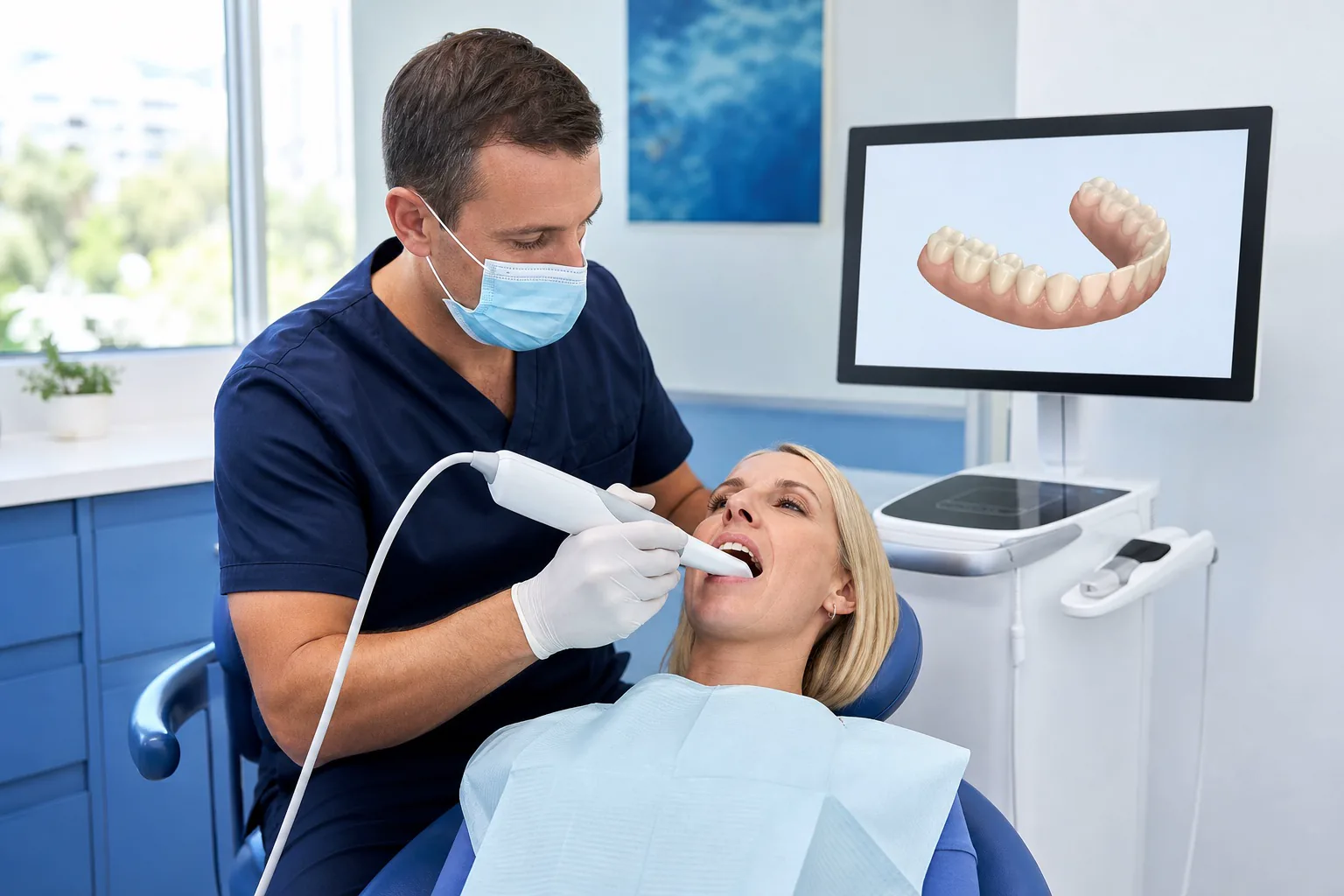
Records may include photographs and a digital scan of the teeth. These records help the dentist assess the starting position and develop a treatment prescription. A digital preview is a planning communication tool, not a guarantee that biology will reproduce every movement exactly as displayed.
4. Reviewing the proposed plan
Before proceeding, you should understand the objectives, likely limitations, alternatives, responsibilities, fees and the proposed review schedule. Ask which parts of the plan are essential, whether attachments or elastics may be used, and what might lead to refinements or a different approach.
5. Wearing aligners and attending reviews
You wear each aligner according to the schedule provided and attend the recommended reviews. The dentist checks oral health and whether the teeth are tracking as planned. If progress differs from the digital plan, the dentist may consider extra records, additional aligners, altered staging or another clinical step.
6. Retention
After active tooth movement, the dentist usually recommends retainers. Teeth can move again over time, so retention is a continuing part of orthodontic care. The dentist will explain the type of retainer, wear schedule, cleaning and replacement considerations appropriate to your result.
Daily wear and care for Spark Clear Aligners
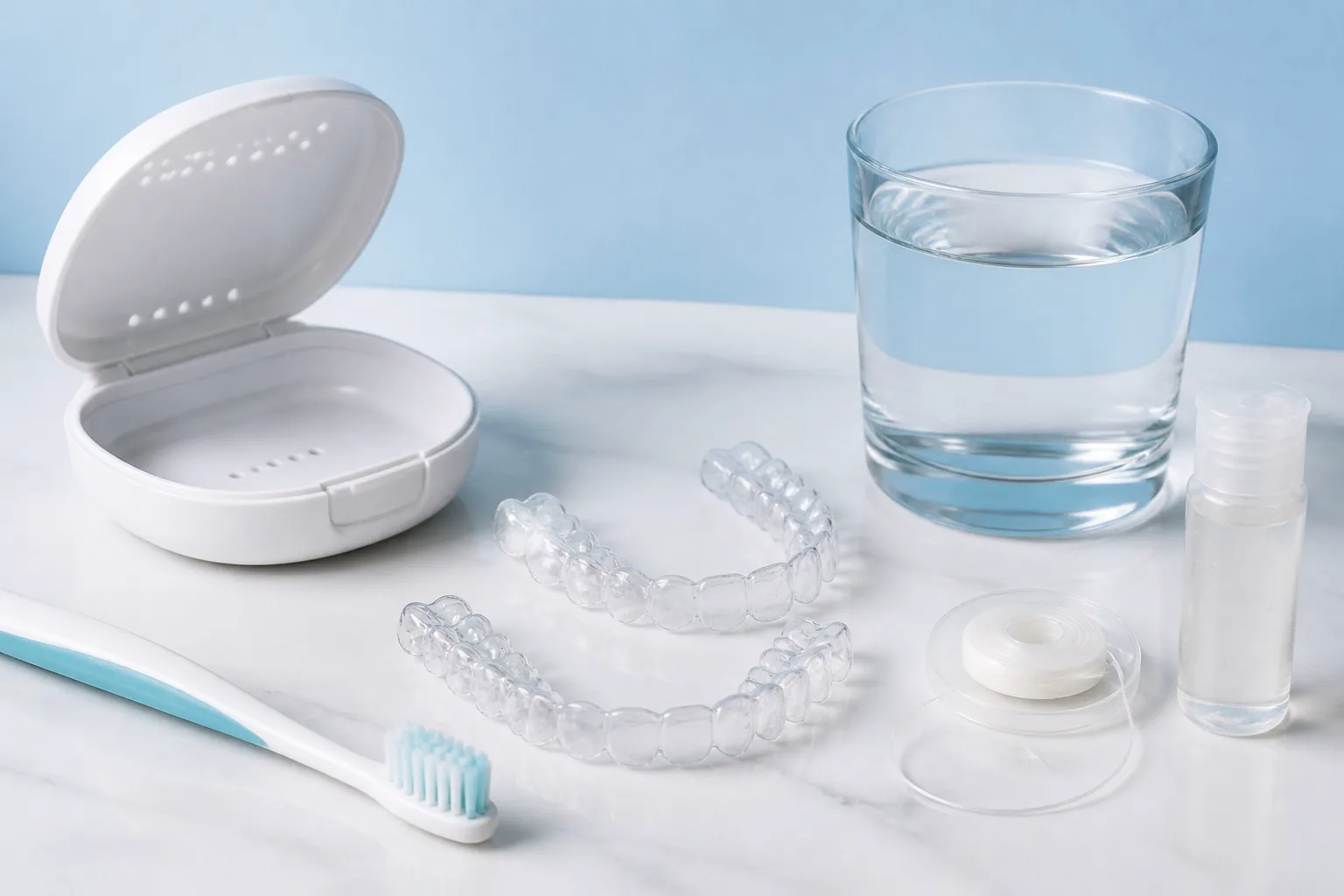
Spark’s patient information generally advises wearing aligners for 20 to 22 hours per day, unless your treating clinician gives you a different direction. Normally, you remove them for food and for drinks other than cool water. Hot liquid can affect an aligner, while coloured or sugary drinks can stain the appliance or expose teeth to sugar and acid while it is covered.
Useful habits include:
- wash your hands before handling aligners;
- remove and insert them using the method demonstrated by the dental team;
- store them in their case rather than wrapping them in a tissue;
- brush and floss before replacing them when practical;
- clean them with cool or lukewarm water and the method advised by your clinician;
- keep them away from heat, pets and young children;
- contact the clinic if an aligner cracks, is lost, feels unusually sharp or no longer seats as expected; and
- bring the relevant aligners to review appointments if requested.
Mild pressure or temporary discomfort can occur, particularly after changing to a new stage. Severe, persistent or unexpected pain is not something to ignore. Contact the clinic for advice rather than changing the schedule yourself.
Potential benefits and important limitations
For a suitable and cooperative patient, clear aligners can offer several practical benefits. They are less visually prominent than metal braces. In addition, you can remove them for meals and brush and floss normally without brackets or wires in the way. Digital planning can also help the dentist explain proposed movements.
However, there are limits and trade-offs. You can see aligners at close range, and some plans include attachments. They only work when you wear them, so daily cooperation is critical. Speech can feel different initially. You can lose or damage trays, and eating or drinking with them can create hygiene or staining problems. Some movements or complex bite problems may be less suitable for an aligner-only approach. Treatment can require refinements, additional appointments or a change in plan.
Orthodontic treatment also has general clinical risks. These can include discomfort, gum irritation, decay or gum problems if oral hygiene is poor, unwanted tooth movement, relapse and changes affecting the roots or supporting tissues. For this reason, the dentist should discuss the nature and relevance of these risks as part of informed consent.
Spark clear aligners and fixed braces: a balanced comparison
| Consideration | Clear aligners | Fixed braces |
|---|---|---|
| Appearance | Transparent trays are less visually prominent, but not invisible; attachments may be noticeable. | Brackets and wires are visible, although their appearance varies by system. |
| Removal | Removed for meals and oral hygiene. | Remain attached throughout active treatment. |
| Cooperation | Consistent wear and careful storage are essential. | Less dependent on remembering to wear an appliance, but care instructions and appointments still matter. |
| Food | Few appliance-related food restrictions while trays are removed; teeth should be cleaned before reinsertion. | Certain hard or sticky foods may need to be avoided to protect brackets and wires. |
| Cleaning | Brushing and flossing are performed without trays in place; the trays also need cleaning. | Cleaning around brackets and wires requires extra attention. |
| Treatment range | Can manage many selected alignment and bite problems, subject to diagnosis. | May be preferred for some movements, complex cases or where removable-appliance wear is unlikely. |
| Appliance issues | Trays may be lost, cracked or stop fitting as expected. | Brackets or wires may break or irritate tissues. |
Neither column is a universal winner. The comparison that matters is the one based on your oral health, treatment objectives, evidence, lifestyle and the clinician’s assessment.
How long do Spark Clear Aligners take, and what do they cost?
There is no responsible single answer before assessment. Several factors can affect treatment time, including the starting problem, movement required, biological response, aligner wear, missed appointments, damaged or lost appliances, refinements and any additional dental or orthodontic care.
Fees also depend on the individual prescription and inclusions. A useful written discussion should clarify what the quoted fee covers, possible extra costs, review arrangements, replacement aligners, refinements, retainers and available payment arrangements. Do not choose treatment based only on the lowest advertised figure; compare the diagnosis, professional oversight, inclusions, alternatives and follow-up.
More official Spark™ videos
The manufacturer produces these videos for patient education and marketing. Smile & Shine Dental Clinic does not adopt every statement in them or use them to promise comfort, treatment time or an individual result.
Browse the official Spark Clear Aligners video library on YouTube.
Frequently asked questions
1. Are Spark aligners invisible?
No appliance is literally invisible. Clear aligners are transparent and usually less visually prominent than metal braces, but they may still be noticed at close range. Tooth-coloured attachments may also be required. A consultation can show you what those features may look like.
2. Do Spark aligners hurt?
Pressure or temporary discomfort can occur when teeth are moving or after changing to a new aligner. Experiences vary, so no provider should advertise treatment as pain-free. Contact the clinic if pain is severe, persistent or unexpected, or if an aligner is damaging the mouth.
3. Can I eat while wearing aligners?
Normally, you remove aligners for eating and for drinks other than cool water. Follow the instructions given for your appliance, clean your teeth before reinserting the aligners when practical, and do not expose them to hot liquid.
4. How many hours a day should I wear them?
Follow the wear and change schedule prescribed by your treating clinician. Meanwhile, the daily wear and care section above explains manufacturer guidance and practical care information, but your individual instructions take priority.
5. How do I know whether I am suitable?
Suitability requires an examination of the teeth, gums and bite, together with appropriate records. The type and complexity of movement, oral health, dental history, growth and likely cooperation all matter. A remote product quiz or photograph is not a diagnosis.
6. Will I need attachments or elastics?
Possibly. Small tooth-coloured attachments, elastics or other features may help with selected movements. Their number, position and duration depend on the treatment plan. Therefore, the dentist should discuss them before treatment when they are anticipated, while recognising that a plan can change in response to progress.
7. Will I need a retainer afterwards?
Dentists usually recommend retention after orthodontic tooth movement because teeth can shift again. The appropriate retainer and wear schedule vary. The treatment discussion should include retainer care, reviews and possible future replacement.
8. Can children or teenagers use Spark aligners?
Some younger patients may be candidates for clear aligners, and Ormco lists Spark Junior and BiteSync within its wider portfolio. Suitability depends on dental development, growth, the bite, oral health and the ability to follow wear instructions. Portfolio availability at Smile & Shine and appropriateness for a particular child must be confirmed by the dentist.
What does current evidence say?
Research should inform treatment without being stretched into guarantees. A 2025 systematic review and meta-analysis of randomised clinical trials found that clear aligners and fixed appliances can both be effective in relatively simple, non-extraction cases. The authors rated the overall evidence as low and highlighted the need for more research in complex cases. That supports individual diagnosis rather than a blanket claim that one appliance is always superior.
Other systematic reviews have examined outcomes including oral health measures and orthodontically induced root resorption. The certainty and applicability of findings vary, and a systematic review does not predict one person’s result. Your current oral health, the planned movements, monitoring and informed consent remain essential.
References and further reading
- Spark Aligners Australia, official patient website.
- Ormco Australia, Spark Clear Aligner System.
- Ormco Australia, Spark treatment options.
- Spark Aligners Australia, Living with aligners.
- Therapeutic Goods Administration, ARTG entry 454405.
- Ormco Australia, Spark On-Demand.
- Ormco Australia, Spark Retainers.
- Spark Aligners Australia, Spark Junior.
- Ormco Australia, TruGEN material information.
- Baneshi M, O’Malley L, El-Angbawi A and Thiruvenkatachari B, 2025, Effectiveness of clear orthodontic aligners in correcting malocclusions: a systematic review and meta-analysis.
- Butsabul P, Kanpittaya P and Nantanee R, 2024, Root resorption in clear aligner treatment detected by CBCT: a systematic review and meta-analysis.
- Oikonomou E, Foros P, Tagkli A, Rahiotis C, Eliades T and Koletsi D, 2021, Impact of aligners and fixed appliances on oral health during orthodontic treatment: a systematic review and meta-analysis.
- Healthdirect Australia, Dental braces and retainers.
- Australian Health Practitioner Regulation Agency, Advertising guidelines and acceptable evidence guidance.
How we work with Spark™ Clear Aligners
Smile & Shine Dental Clinic works with the Spark™ Clear Aligner System by Ormco as one of the clear-aligner treatment systems available for suitable patients. We use it as a treatment provider after individual assessment. This does not imply an exclusive commercial partnership, manufacturer endorsement of the clinic, endorsement by the TGA, or that every product in the manufacturer’s portfolio is available or appropriate in every case.
Important medical information
This article provides general information and is not personal dental advice, diagnosis or a treatment guarantee. The dentist can discuss suitability, risks, alternatives, timing, fees and likely outcomes only after an individual assessment. Product information may change; your clinician’s current instructions take priority.
Ready to discuss your options?
If you are considering clear aligners in Cockburn Central, the next step is an assessment—not a product promise. We can review your goals, oral health and bite, explain reasonable options and help you make an informed decision.
Leave a Comment