Wisdom Tooth Removal in Cockburn Central
Wisdom tooth assessment helps determine whether a tooth can be monitored, treated or should be removed because of pain, infection, decay, damage or difficulty cleaning.

Understanding Wisdom Tooth Removal
Wisdom teeth are the last adult molars and may erupt fully, remain partly covered by gum or stay impacted in bone. A wisdom tooth does not need removal simply because it exists; the decision should be based on current disease, predictable future problems and individual risk.
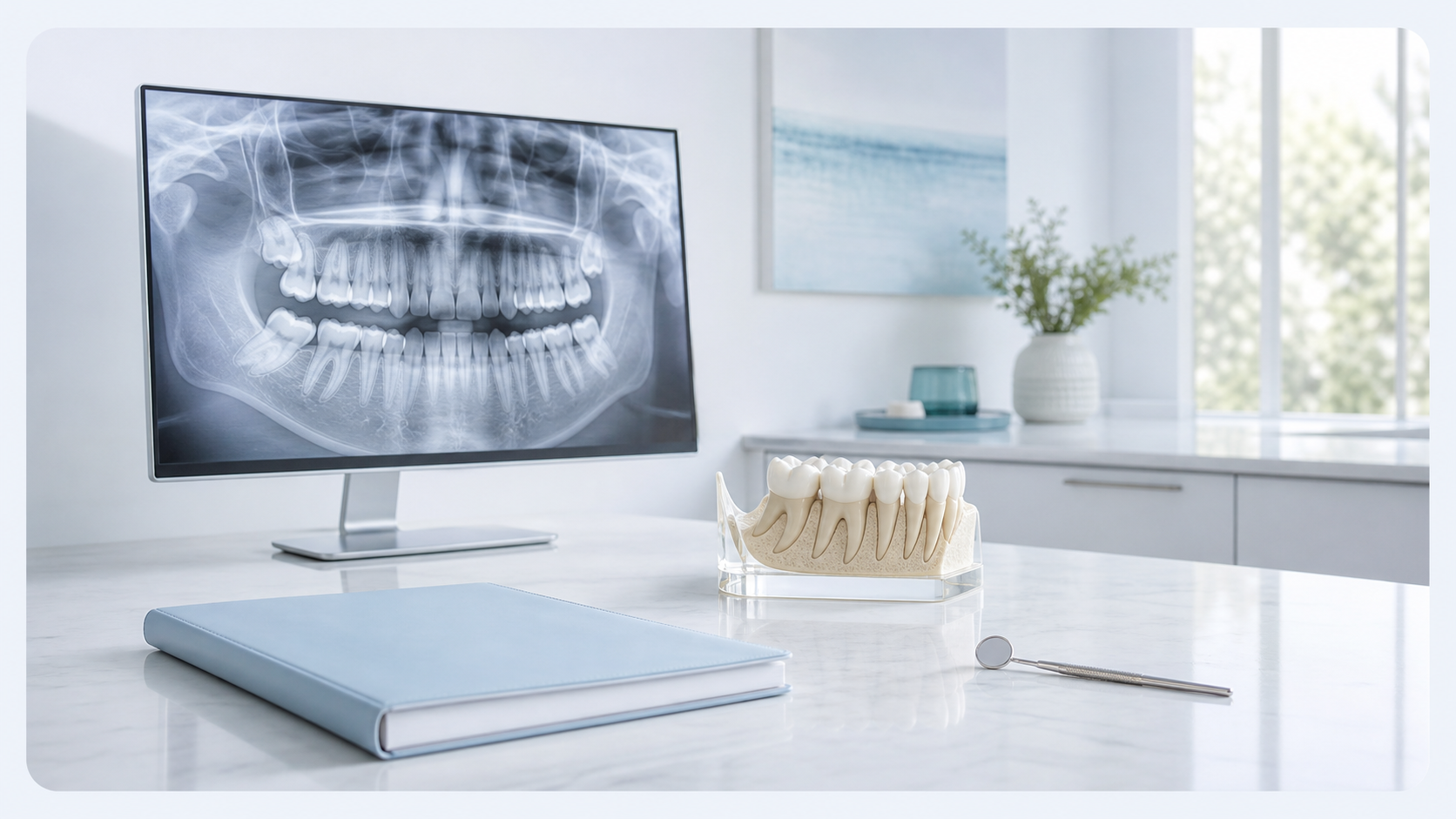
Partly erupted teeth can trap food and bacteria, causing recurring gum inflammation, decay or damage to the tooth in front. Imaging helps the dentist assess root shape, depth and proximity to important structures before recommending care.
Who this may suit
- Recurring pain or swelling around a wisdom tooth
- Food trapping and difficulty cleaning
- Decay in the wisdom tooth or adjacent molar
- An impacted tooth associated with disease
- A tooth that interferes with planned dental treatment
What your dentist will assess
- Eruption position and access for cleaning
- Health of the surrounding gum and adjacent tooth
- Root number, shape and stage of development
- Relationship to nerves, sinus and surrounding bone
- Medical history, medicines and healing considerations
What to expect
Examination and X-ray
Discuss symptoms and assess the tooth clinically, then review appropriate imaging.
Consent and planning
Explain whether monitoring or removal is recommended, expected complexity, alternatives, fees and material risks.
Removal
The area is numbed. The technique depends on whether the tooth is erupted, covered by gum or impacted in bone.
Recovery and review
Receive instructions for bleeding, swelling, cleaning, diet and pain relief, with follow-up when indicated.
Preparing and caring for your result
Before or during treatment
- Arrange transport or support if sedation is planned.
- Tell the dentist about blood thinners, allergies and medical conditions.
- Prepare soft foods, a cold pack and recommended medicines.
- Avoid smoking because it can increase healing complications.
After-care and maintenance
- Bite firmly on gauze as directed and avoid vigorous rinsing on the first day.
- Choose soft foods, stay hydrated and protect the blood clot.
- Start gentle salt-water rinses only when advised.
- Contact the clinic for uncontrolled bleeding, worsening swelling, fever or severe pain.
Risks vary with tooth position and anatomy and may include pain, swelling, infection, dry socket, damage to nearby teeth, sinus communication or temporary or permanent altered sensation. Your dentist will discuss risks relevant to your imaging.
Common questions
Do all wisdom teeth need to be removed?
No. Healthy, functional wisdom teeth that can be cleaned may be monitored. Removal is considered when there is disease, recurrent symptoms or a clear risk that outweighs the procedure.
Will I be awake?
Many removals are completed with local anaesthetic. Sedation or referral may be discussed for anxiety or complexity. The suitable option depends on your health and the procedure.
How long is recovery?
Swelling and soreness are often greatest in the first few days and then improve, but recovery varies with complexity and the individual. Follow your dentist’s specific advice.
What is dry socket?
Dry socket is delayed healing when the protective blood clot is lost or breaks down. It can cause strong pain several days after removal and needs dental care.
When can I return to work or exercise?
Planning depends on the number and complexity of teeth removed and your work. Strenuous exercise is usually avoided early because it can restart bleeding or increase throbbing.
Related services
Talk with a dentist about Wisdom Tooth Removal
Visit Smile & Shine Dental Clinic at Unit 2, 840 North Lake Road, Cockburn Central WA 6164. Your dentist will assess your needs, explain suitable choices and provide an estimate before treatment wherever practical.